Zakiya Lathan, News Editor, Digital and Audio
A 28-year-old worker at a Russian anti-plague institute died after a reported laboratory accident, prompting quarantines and medical monitoring. Russian authorities, however, have not confirmed that plague killed her.
A laboratory worker has died in Russia’s Siberian Irkutsk region amid conflicting reports that she may have contracted pneumonic plague after an accident at a research facility specializing in dangerous pathogens.
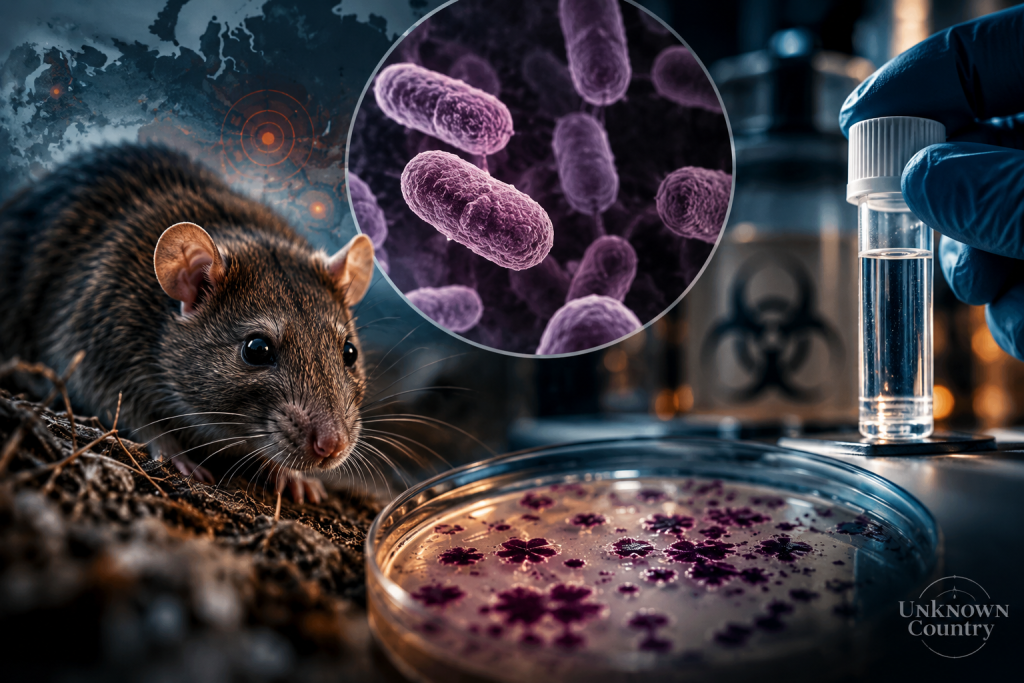
Daria Shipilova, 28, worked at the Irkutsk Anti-Plague Research Institute in Shelekhov. According to The Moscow Times, nearly 200 people were placed under medical observation following her death, which occurred overnight between Oct. 1 and Oct. 2, 2026. Russian media reported that Shipilova may have accidentally broken a test tube containing plague bacteria Sept. 25.
That account has not been independently confirmed.
Russia’s public health agency, Rospotrebnadzor, has instead described Shipilova’s illness as “pneumonia of unknown origin” and said microorganisms associated with her professional work were not detected. Irkutsk Gov. Igor Kobzev said people who had contact with her were being examined and monitored and had shown no signs of infection.
The Kyiv Independent reported that several hospitals instituted quarantine measures and an aluminum plant in Shelekhov imposed a mask requirement as a precaution. The outlet said it could not independently verify some reports circulating in Russian media concerning the suspected plague case.
__________
__________
Author and investigative journalist Annie Jacobsen also drew attention to the incident on X, describing reports of security personnel accompanying ambulances carrying people who had been in contact with Shipilova as significant. Those reports likewise remain unverified.
Plague is not simply a disease of medieval history. It is a bacterial infection caused by Yersinia pestis, according to the World Health Organization. It usually circulates among small mammals and fleas and can appear in three principal forms: bubonic, septicemic and pneumonic plague.
Pneumonic plague is particularly dangerous because it affects the lungs and can spread between people through respiratory particles. Untreated pneumonic and septicemic plague are fatal, according to WHO, and pneumonic plague can kill within 18 to 24 hours after symptoms begin if treatment is not started promptly.
There is, however, an important difference between plague today and the disease that devastated populations during the Black Death: Plague can be successfully treated with antibiotics.
The U.S. Centers for Disease Control and Prevention says treatment should begin as soon as plague is suspected rather than waiting for laboratory confirmation. Gentamicin and fluoroquinolones are among the first-line treatments used in the United States.
That makes Shipilova’s death significant if plague is ultimately confirmed, particularly given her employment at a specialized research facility. For now, however, the available evidence supports describing this as a suspected plague case — not a confirmed laboratory-acquired plague death or confirmed outbreak.
Subscribe to Unknown Country today. Keep the truth coming! Click here to learn more.
One Response
I recommend everyone read ‘The Hot Zone’ by Richard Preston, a non-fiction (but dramatized) story. From a review:
“A highly infectious, deadly virus from the central African rain forest suddenly appears in the suburbs of Washington, D.C. There is no cure. In a few days 90 percent of its victims are dead. A secret military SWAT team of soldiers and scientists is mobilized to stop the outbreak of this exotic “hot” virus. The Hot Zone tells this dramatic story, giving a hair-raising account of the appearance of rare and lethal viruses and their “crashes” into the human race. Shocking, frightening, and impossible to ignore, The Hot Zone proves that truth really is scarier than fiction.”
Most people have no idea that we could face with a lot worse pandemic than COVID. When I was in public health we even had trainings about this sort of thing. I remember when the fictional movie ‘Contagion’ came out in 2011, most of us at work saw it, and our epidemiologist made a joke about, “Of course, the epi was one of the first to go while studying the disease.” We all agreed that the movie, while fictional, was very close to what would actually happen, and we joked that the next big pandemic was only a plane ride away.
To make matters worse, The CDC which used held in high regard all over the world, has been cut off at the knees by the current presidential administration. I shudder to think what would happen now if another dangerous pandemic happens.