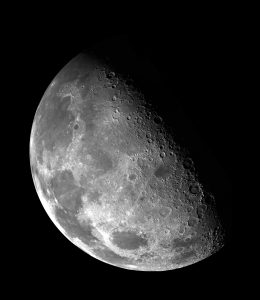
Aug. 27-28‘s deep partial lunar eclipse will place 96.3% of the Moon’s disk inside Earth’s darkest shadow. For observers interested in anomalous phenomena, it is also a useful reminder of just how strange a perfectly ordinary sky can become.
Anyone watching the sky tonight is in for an unusual sight: Earth’s shadow will swallow nearly the entire face of the full Moon, stopping just short of producing a total lunar eclipse.
According to NASA’s Scientific Visualization Studio, the Aug. 27-28 partial lunar eclipse will reach its maximum at approximately 4:13 a.m. UTC Aug. 28, when 96.3% of the Moon’s disk will be inside Earth’s umbra, the dark central region of our planet’s shadow. NASA says the eclipse will be visible from the Americas — except Alaska and northwestern Canada for the deepest phase — as well as western Europe and western Africa.
The partial phase begins at approximately 2:34 a.m. UTC and continues until about 5:52 a.m. UTC, according to NASA data. Exact viewing circumstances depend on location.
As the eclipse deepens, observers may notice something more interesting than simple darkness. NASA explains that sunlight passing through Earth’s atmosphere loses more of its shorter blue and violet wavelengths through scattering, while longer red and orange wavelengths can reach the Moon. The result can give the eclipsed portion of the Moon a rusty or coppery appearance.
For people interested in unidentified anomalous phenomena, tonight also offers a useful exercise in learning what the ordinary sky can do before deciding that something is extraordinary.
__________
Watch how your eyes respond as the Moon’s brightness changes. Notice nearby aircraft and satellites. If you are photographing or recording the eclipse, pay attention to lens flare, internal reflections, digital zoom artifacts, exposure changes and apparent motion introduced when a bright object is framed against a dark sky.
Those effects are not evidence that every unusual observation has a conventional explanation. Nor is there verified evidence that lunar eclipses produce increased UAP activity. Rather, an eclipse provides a predictable event during which familiar objects and optical effects may suddenly look unfamiliar — making it an excellent opportunity to practice careful observation.
If something unusual does appear, record the exact time and direction, note its movement relative to stars or the Moon, and, when possible, keep fixed objects in the frame for reference. Those details can make a later identification much easier.
And unlike a solar eclipse, NASA says no special eye protection is required to watch a lunar eclipse. Binoculars or a small telescope can provide an even closer look at Earth’s shadow crossing the lunar surface.
Tonight, the strangest-looking object in the sky may simply be the Moon itself.
Subscribe to Unknown Country today. Keep the truth coming! Click here to learn more.